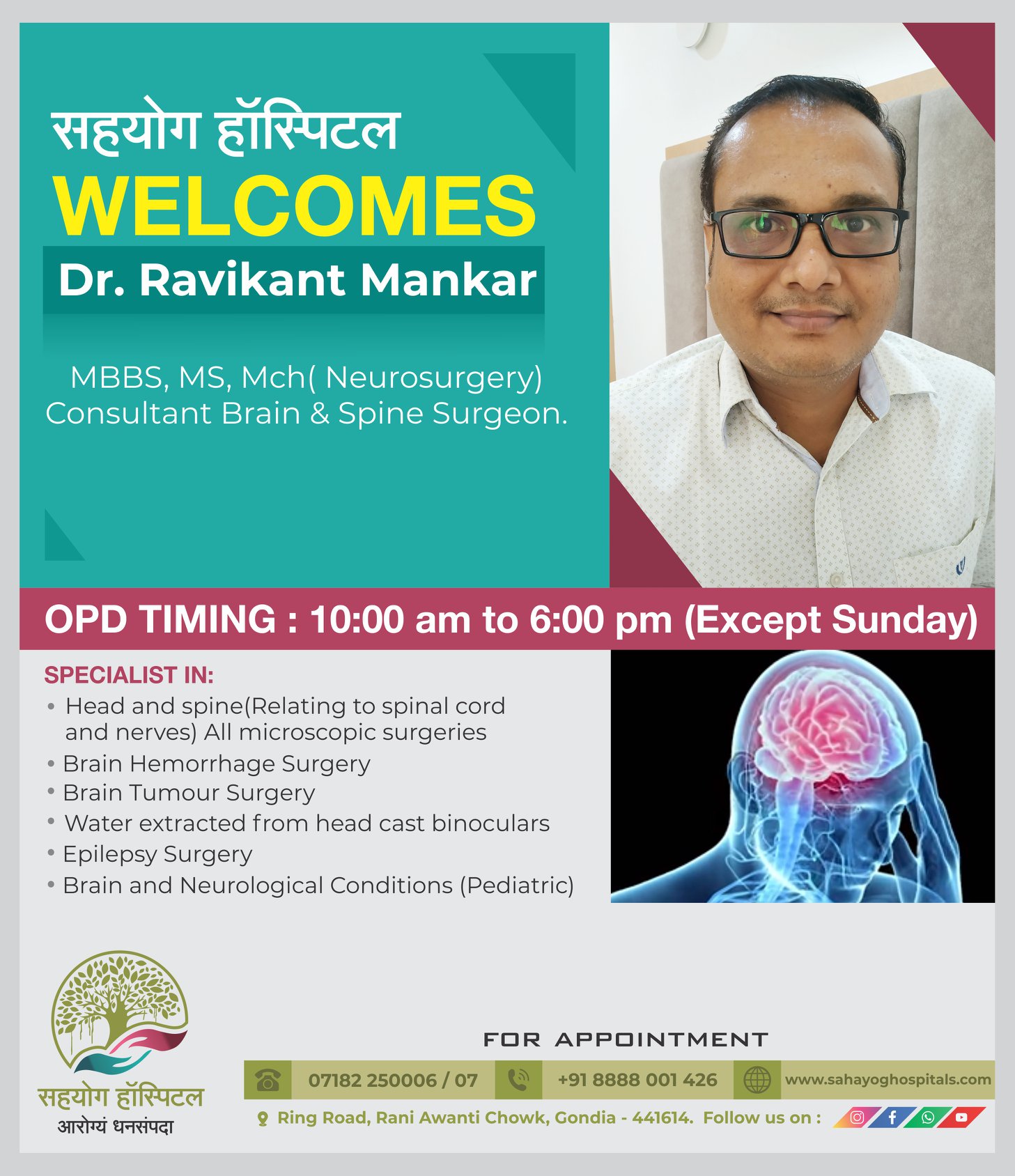
Name: Dr. Ravikant Mankar
Speciality: Neurosurgeon
Qualification: MBBS, MS, MCH (Neurosurgery)
Experience: 18 + Years
Email: ravimankar98@gmail.com
Mobile: 8209818633
Registration No: 2005/01/2094
Name: Dr. Ravikant Mankar
Speciality: Neurosurgeon
Qualification: MBBS, MS, MCH (Neurosurgery)
Experience: 18 + Years
Email: ravimankar98@gmail.com
Mobile: 8209818633
Registration No: 2005/01/2094

A craniotomy is the most common type of operation for a brain tumor. You usually have a craniotomy under a general anesthetic. This means that you will be asleep and won't feel anything. During a craniotomy, the neurosurgeon cuts out an area of bone from your skull.

Autism, Attention Deficit Hyperactivity Disorder (ADHD), Dyspraxia, Epilepsy, Headaches, Dyslexia, Cerebral Palsy, Neonatal encephalopathy, Abnormal muscle tone, Neural tube defects, Periventricular leukomalacia (PVL), Intraventricular hemorrhage (IVH)

If a burst cerebral aneurysm causes a hemorrhage, a surgeon may remove part of the skull and clip the artery. This procedure is called a craniotomy. Other treatment options include anti-anxiety drugs, anti-epileptic drugs, and other medications to control symptoms, such as seizures and severe headaches.

Keyhole surgery is the concept of safely removing brain & skull base tumors through smaller, more precise openings that minimize collateral damage to the surrounding scalp, brain, blood vessels, and nerves.

Epilepsy surgery is most effective when seizures always occur in a single location in the brain. Epilepsy surgery is not the first line of treatment but is considered when at least two anti-seizure medications have failed to control seizures.

Brain surgery is used to treat a variety of conditions, such as tumors, blood clots, aneurysms, epilepsy, and Parkinson's disease. Spinal fusion, also called spondylodesis or spondylosyndesis, is a neurosurgical or orthopedic surgical technique that joins two or more vertebrae.
 15-Mar-2022
 Very Good Operating Skills, best Neurosurgeon. Soft spoken and kind attitude towards patient
 25-May-2022
 Best Neurosurgeon in Gondia. Everything under one roof Neurosurgeon neurophysician CT scan, neuro ICU, neuro OT, EEG,EMG, polytrauma management